Waking up with a sore jaw, sensitive teeth, or a headache can make for an uncomfortable start to your day. While there are several possible causes, one that often goes unnoticed is teeth grinding.
Teeth grinding, also known as bruxism, can happen while you’re sleeping or even throughout the day. Many people are unaware they’re doing it until their dentist notices signs of wear or they begin experiencing discomfort.
Learning to recognize the symptoms can help you protect your teeth and prevent further damage.
What Causes Teeth Grinding?
Teeth grinding can develop for several reasons. Stress and anxiety are common contributing factors, particularly for people who clench their jaws during the day.
Nighttime grinding can also be associated with sleep disorders, certain medications, and other factors affecting sleep.
Some people grind their teeth occasionally, while others experience it frequently enough to affect their oral health.
Common Signs You May Be Grinding Your Teeth
Because nighttime grinding happens while you’re asleep, the warning signs are not always obvious.
Some symptoms to watch for include:
- Morning headaches: Frequent dull headaches, especially around the temples, may be associated with nighttime clenching.
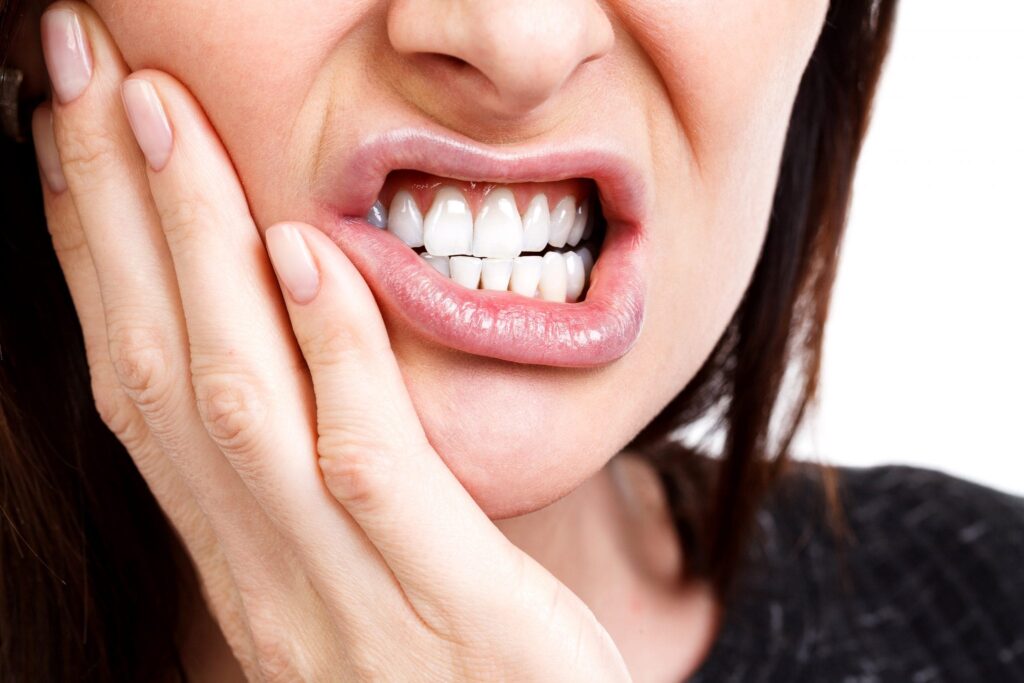
- Jaw pain or tightness: Your jaw muscles may feel sore or tired when you wake up.
- Tooth sensitivity: Excessive pressure and tooth wear can make teeth more sensitive to temperature changes.
- Worn or flattened teeth: Grinding can gradually change the shape of your teeth and wear down enamel.
- Chipped or cracked teeth: Repeated pressure can contribute to damage, especially in teeth with existing restorations.
- Sleep disturbances: Grinding noises may be loud enough for a partner or family member to notice.
Not everyone experiences the same symptoms, and some people have no noticeable discomfort at all.
How Teeth Grinding Can Affect Your Smile
Your teeth are designed to handle the pressure of everyday chewing. Grinding and clenching can place additional force on the teeth and surrounding muscles.
Over time, this pressure may contribute to worn enamel, tooth fractures, damaged fillings, and discomfort around the jaw.
Severe wear can also change the way your teeth fit together and may require restorative dental treatment.
Regular dental examinations allow your dentist to identify changes in your teeth before more significant damage develops.
Can a Custom Night Guard Help?
One common way to protect teeth from nighttime grinding is with a custom dental night guard.
A night guard is a protective appliance worn while sleeping. It creates a barrier between your upper and lower teeth, helping reduce direct tooth-to-tooth contact.
Unlike many store-bought options, a custom night guard is made to fit your teeth and bite.
Although a night guard may not stop the grinding itself, it can help protect your teeth from additional wear and damage.
Your dentist can determine whether a night guard is the right option based on your symptoms and dental health.
What Else Can You Do About Teeth Grinding?
Managing teeth grinding may involve more than protecting your teeth at night.
Reducing daytime jaw clenching, improving sleep habits, and addressing stress can be helpful for some patients.
Pay attention to how you hold your jaw throughout the day. When you’re not eating or speaking, your upper and lower teeth should generally remain slightly apart.
Your dentist may also recommend additional evaluation if your symptoms suggest an underlying sleep-related condition.
When Should You Talk to Your Dentist?
Persistent jaw soreness, frequent morning headaches, increased tooth sensitivity, or visible changes in your teeth are good reasons to schedule an appointment.
Your dentist can examine your teeth, evaluate your bite, and look for signs of grinding or clenching.
Early attention may help prevent more extensive tooth damage and keep your smile comfortable.
Protect Your Smile While You Sleep
Teeth grinding can affect your dental health without you even realizing it. Recognizing the warning signs and getting the right care can help protect your teeth for years to come.
Wurzbach Parkway Family Dental provides personalized dental care to help patients maintain healthy, comfortable smiles. If you’re experiencing symptoms of teeth grinding, our team can evaluate your concerns and recommend appropriate treatment options.
Schedule your appointment at www.210wpfd.com/request-appointment/ or call (210) 877-2273.