
Missing a tooth—or multiple teeth—can affect everything from your confidence to your ability to chew and speak comfortably. Fortunately, modern dentistry offers excellent solutions to restore your smile. Two of the most common options are dental implants and dental bridges. But which one is right for you?
In this blog post, we’ll break down the differences between implants and bridges, including the pros, cons, and ideal candidates for each.
What Is a Dental Bridge?
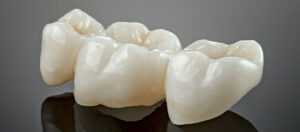
A dental bridge is a fixed restoration that “bridges” the gap left by one or more missing teeth. It typically consists of one or more artificial teeth (called pontics) held in place by dental crowns placed on the adjacent healthy teeth.
Pros of Dental Bridges:
-
Faster process – Often completed in 2–3 dental visits.
-
More affordable upfront than implants.
-
Non-surgical – Ideal for patients who prefer to avoid surgery.
-
Restores appearance and function quickly.
Cons of Dental Bridges:
-
Requires altering healthy teeth – Neighboring teeth must be filed down to support the bridge.
-
May need replacement sooner – Bridges typically last 7–15 years.
-
Doesn’t prevent bone loss – Since there’s no implant in the jawbone, bone loss can still occur in the missing tooth area.
What Is a Dental Implant?
A dental implant is a titanium post surgically placed into the jawbone, where it acts like a tooth root. A crown is then attached to the top, creating a durable, natural-looking replacement for a single tooth or several teeth.
Pros of Dental Implants:
-
Long-lasting solution – Implants can last 20+ years, often a lifetime with proper care.
-
Preserves bone – Stimulates the jawbone and prevents bone loss.
-
Looks and feels natural – Closely mimics the function and appearance of a real tooth.
-
Doesn’t affect neighboring teeth – Unlike bridges, implants don’t rely on surrounding teeth for support.
Cons of Dental Implants:
-
More expensive upfront
-
Requires surgery – Includes a healing period (usually a few months).
-
Not suitable for everyone – Adequate bone density and healthy gums are needed.
-
Longer treatment timeline – Full treatment may take several months from start to finish.
What Your Dentist Will Consider
To determine the best solution for your needs, your dentist will evaluate:
-
Your oral and overall health
-
The location of the missing tooth
-
Your bone density
-
Your budget
-
Your personal preferences
Both dental implants and bridges are effective solutions for missing teeth, each with unique benefits. If you’re looking for a long-term, bone-preserving option and are okay with a surgical procedure, dental implants may be your best bet. If you need a faster, non-surgical solution or have budget constraints, a dental bridge might be the right choice.
The best way to decide? Schedule a consultation with your dentist. They’ll assess your smile, answer your questions, and guide you to the option that fits your goals and lifestyle.